
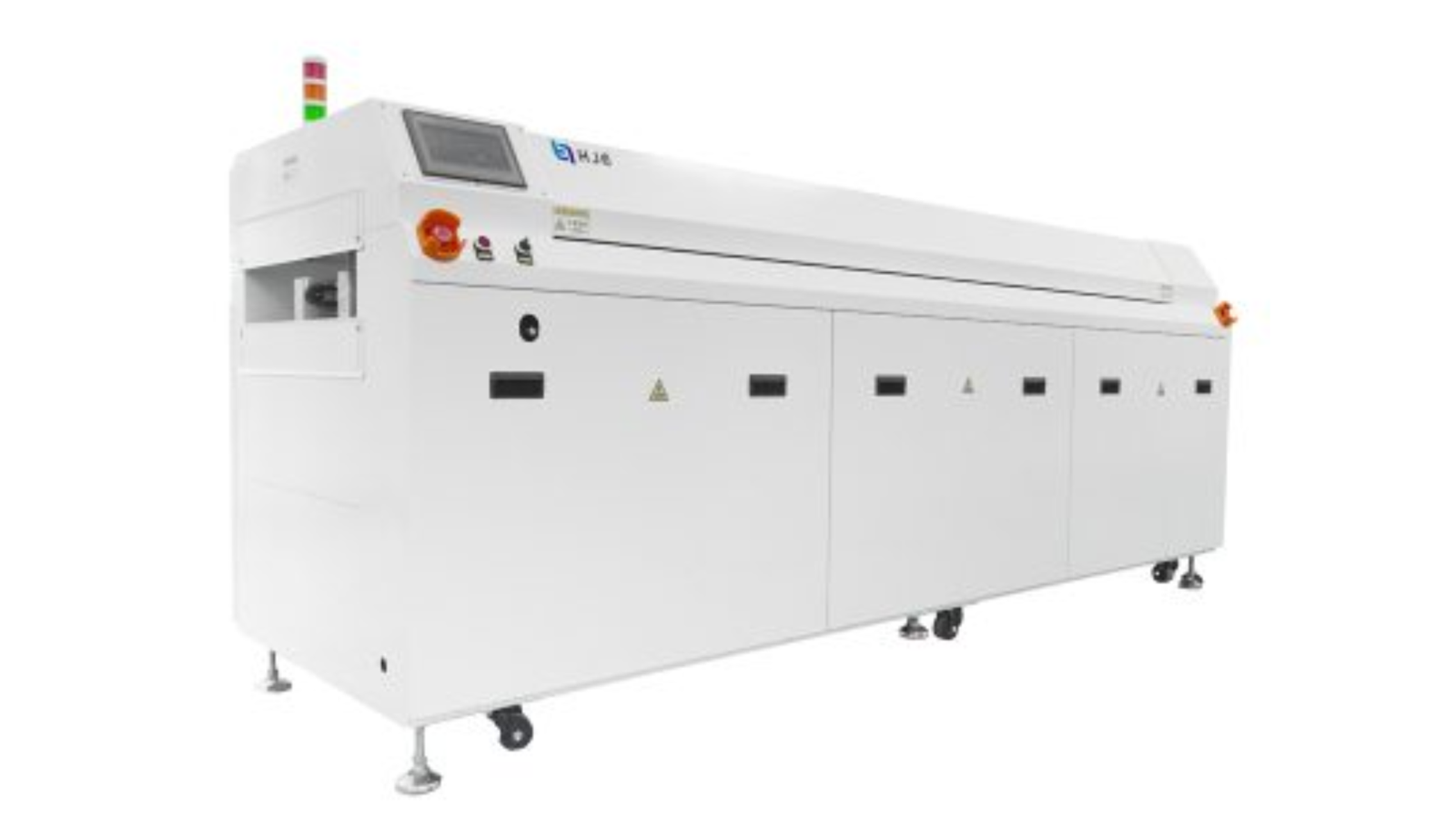
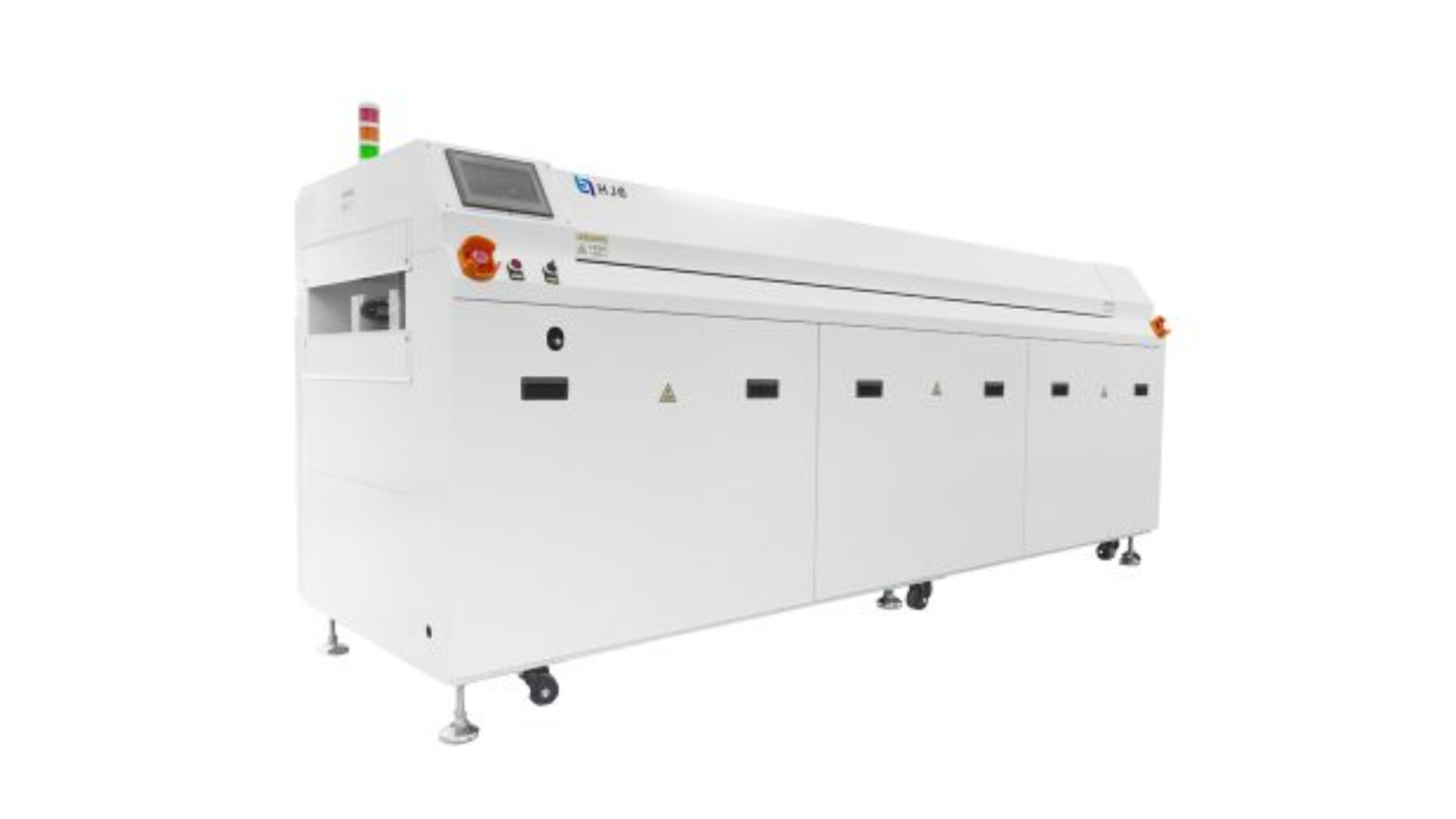
Vacuum reflow soldering ovens represent a significant advancement in surface mount technology (SMT) assembly. These systems don’t just solder, they refine the entire process, ensuring reliability, consistency, and superior product quality.
Let’s explore the key advantages of vacuum reflow soldering machines.
Traditional reflow methods often leave voids or gas bubbles in the solder joints, leading to a weaker connection. The efficiency of this process directly impacts the overall reliability and performance of the final product. And that’s where reflow soldering machines/ovens stand out.
In this blog post, we’ll explore the advantages of vacuum reflow soldering machines to help manufacturers produce high-quality components and satisfy stringent requirements in high-tech markets.
Top Advantages of Vacuum Reflow Soldering Machines in Modern Electronic Manufacturing
1. Drastic Void Reduction
One of the biggest advantages of vacuum reflow soldering machines is their ability to minimise voids in solder joints.
Vacuum pressure extracts trapped air and flux gases
Improves thermal and electrical conductivity
Enhances long-term reliability of components
2. Enhanced Product Reliability
In industries like automotive and aerospace, reliability is non-negotiable. Unlike traditional methods, vacuum reflow ovens can reduce void levels to below 2%, which is critical for the long-term integrity of high-power electronics and safety-critical systems.
Vacuum reflow soldering machines ensure:
Stronger solder joints
Better mechanical stability
Reduced risk of field failures
For businesses, this translates into fewer warranty claims and stronger customer trust.
3. Superior Thermal Reliability
Heat management is critical in modern PCBs, especially in power modules and LED assemblies.
Vacuum reflow helps by:
Creating dense, uniform solder joints
Improving heat dissipation
Preventing overheating issues
This is particularly useful in applications like EV systems and industrial power supplies.
Lower void levels significantly improve thermal conductivity and electrical performance, enhancing the overall lifespan of electronic products.
4. Improved Solder Joint Quality
Consistency is key in mass production, and vacuum reflow delivers exactly that. It uses a vacuum chamber during the molten phase to actively extract trapped gases and flux volatiles.
Key improvements include:
Uniform solder distribution
Reduced solder balling
Cleaner joint formation
5. Optimised Performance for Advanced Components
As a result of the vacuum requirement of the soldering oven, contaminants such as oxygen, moisture, and other gases are removed. It optimises performance for complex parts, such as QNFs, BGAs, and power electronics.
Vacuum reflow soldering machines are ideal for:
Fine-pitch components
Bottom-terminated devices
High-density PCB designs
Lower void rates ensure strong electrical, mechanical, and thermal performance, which is vital for automotive, aerospace, and high-power applications.
6. Reduced Rework and Scrap Costs
Let’s be honest, in electronic manufacturing, rework is expensive. It consumes time, labour, and resources.
With vacuum reflow:
Defects are minimised at the source
Rework rates drop significantly
Material wastage is reduced
While the initial equipment cost is higher than that of conventional systems, a vacuum oven can cut rework costs by up to 30% to 40%. And for a mid-sized EMS company, even a 5% reduction in rework can lead to substantial annual savings.
7. Increased Process Consistency
Consistency across batches is essential for scaling production to ensure higher yields, lower defect rates, and consistent component placement at high speed.
Vacuum reflow systems offer:
Controlled process environments
Repeatable results
Reduced variability in solder paste printing and placement
Prevent defects like tombstoning and bridging
This is especially beneficial for manufacturers handling high-volume production.
8. Compliance with Industry Standards
Many industries now demand stricter quality standards, especially in sectors like automotive and medical electronics.
Vacuum reflow helps manufacturers:
Meet IPC standards
Achieve lower voiding percentages
Pass stringent quality audits
This makes it easier to work with global clients who expect top-tier quality.
The Bottom Line
The advantages of vacuum reflow soldering machines go far beyond just better soldering. They offer a complete upgrade to your manufacturing process, improving reliability, reducing costs, and enabling you to meet the demands of advanced electronics.
If you’re aiming for higher quality, fewer defects, and stronger customer trust, vacuum reflow is no longer optional. It’s essential.
Want to scale your SMT process? At HJE Tech India Pvt. Ltd., we provide advanced SMT/THT solutions, including vacuum reflow soldering machines, SMT production equipment, and complete technical support tailored to your manufacturing needs.
Get in touch with HJE Tech India Pvt. Ltd. today to achieve precision, efficiency, and long-term success in electronics manufacturing!
Disclaimer: This content is for informational purposes only and is written by a professional content writer. Contact us to learn more about vacuum reflow soldering machines!


Write a comment ...